
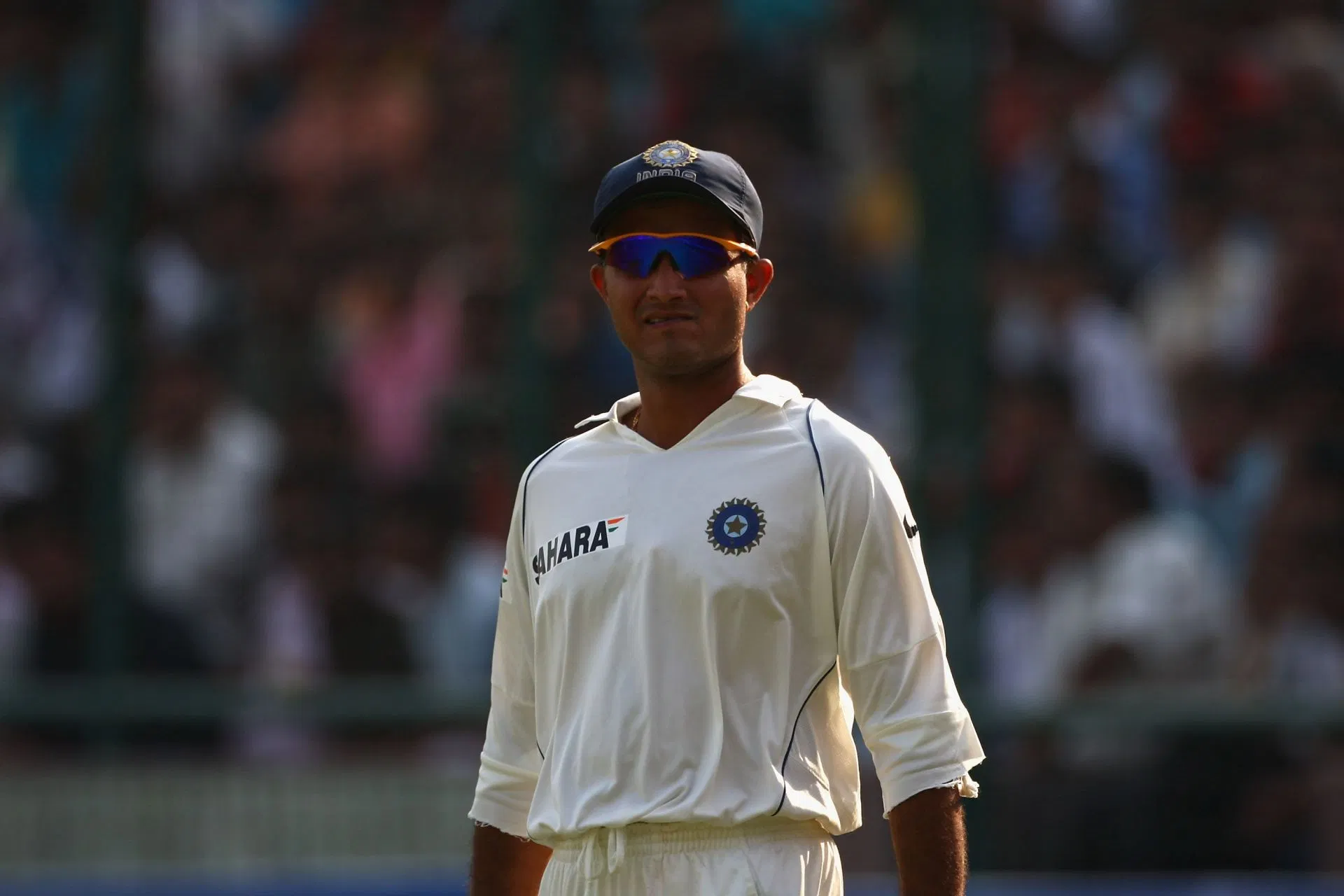
Sourav Ganguly has never been a cricketer or administrator who avoids difficult conversations. During his playing career, the former India captain became known for his competitive personality. Later, his roles as a cricket administrator and commentator continued to put him at the centre of discussions about Indian cricket.
Some of his remarks have concerned leadership decisions, while others have revisited disagreements from his playing days. Their impact has varied, but each episode offers a glimpse into the tensions that can surround high-profile figures in the sport.
Here are five notable instances in which Ganguly’s public comments attracted attention and debate.
5. Taking credit for backing Rohit Sharma’s captaincy
India’s victory at the 2024 ICC Men’s T20 World Cup gave Ganguly an opportunity to revisit a decision from his time as Board of Control for Cricket in India (BCCI) president.
In a July 2024 interview with the Bengali publication Aajkaal, Ganguly recalled the criticism he faced when Rohit Sharma was appointed India’s captain. He argued that the success of the team under Rohit’s leadership had changed the public conversation around that decision. Sportskeeda reported his remarks at the time.
The comments attracted attention because captaincy appointments are rarely the work of one person alone. They involve selectors, team management and the board’s leadership, while results ultimately depend on the players and coaching staff.
Rohit’s World Cup victory strengthened his own record as a leader. Ganguly’s comments, meanwhile, reopened a discussion about how much credit administrators should receive for decisions that later prove successful.
In a conversation with Ajkaal on July 23, 2024
“”When I handed Rohit Sharma the captaincy of the Indian team, everyone criticised me. Now that India has won the T20 World Cup under the captaincy of Rohit Sharma, everyone has stopped abusing me for it. “
He further added
“In fact, I think everyone has forgotten that it was I who appointed him as the captain of the Indian team.”
4. Explaining the events surrounding Virat Kohli’s captaincy
The transition in India’s leadership during 2021 and early 2022 became one of the most widely discussed administrative episodes in recent Indian cricket.
Virat Kohli stepped down as T20I captain after the 2021 T20 World Cup. He subsequently lost the ODI captaincy and later relinquished the Test captaincy in January 2022.
Ganguly was BCCI president during this period. He later explained his account of the discussions surrounding Kohli’s leadership responsibilities, saying that the move towards separate white-ball and red-ball captains was intended to clarify the structure.
The issue generated debate because Kohli’s account of the communication differed from the explanation Ganguly publicly gave. The episode highlighted how leadership changes can become contentious when the board, captain and public do not appear to share the same understanding of events.
For a cricket board, communication is crucial during such transitions. Even when a decision has a sporting rationale, uncertainty about how it was reached can overshadow the intended outcome.
“I didn’t remove Virat from captaincy. I have said this several times. He (Kohli) was not interested to lead in T20Is. So, after he made that decision, I told him, if you’re not interested to lead in T20Is, it’s better if you step down from entire white-ball cricket formats. Let there be a white-ball captain and a red-ball captain.”
3. Ricky Ponting’s departure from Delhi Capitals

Ganguly also attracted attention in July 2024 when he discussed the future of Ricky Ponting at Delhi Capitals.
Ponting had spent seven seasons associated with the franchise as head coach. On July 13, Ganguly indicated publicly that Ponting would not continue in the role. Delhi Capitals confirmed the coaching change the following day, according to the contemporary account published by Sportskeeda.
The announcement drew interest because coaching appointments and departures are normally communicated through official franchise channels. Ganguly’s remarks put the decision into the public conversation before the formal announcement.
His comments also raised questions about the franchise’s next direction, including the prospect of greater opportunities for Indian coaches.
The episode illustrates the difference between discussing a decision and formally announcing it. In professional sport, timing matters because statements from senior officials can quickly become news, particularly when they concern prominent figures.
“Let me break a news. head Ricky Ponting will not be the coach of Delhi Capitals. Geoffrey Boycott was right, as Ponting has not been able to take the franchise forward in the past 7 years. I have to speak with the franchise and ask them to look at Indian coaches. I will be the head coach. Let’s see how I perform.”
2. A joke about stress that drew criticism
Not every controversy involving Ganguly has concerned cricket tactics or administration.
At a public event in Gurugram in December 2021, Ganguly was asked how he dealt with stress. He responded with a joke about wives and girlfriends. Sportskeeda reported that the remark attracted criticism on social media, with some people viewing it as sexist.
The context matters: the comment was presented as humour rather than a formal statement about relationships. However, public figures are often judged not only by their intended meaning but also by how their words may be interpreted by different audiences.
The reaction demonstrates how a short remark outside a sporting context can become a public issue. It also shows why humour from prominent personalities can be received differently depending on the setting and the language used.
“There is no stress in life. Only wife and girlfriend give stress.”
1. Revisiting the Greg Chappell era
One of the most significant disputes in Ganguly’s career involved Greg Chappell, who coached India during the mid-2000s.
Ganguly lost the captaincy, was subsequently dropped from the national team and later returned to the side. The period became a major talking point in Indian cricket because it involved disagreements over team management, leadership and the direction of the dressing room.
In a 2011 interview cited by Sportskeeda, Ganguly criticised the atmosphere within the team during Chappell’s tenure and also questioned Rahul Dravid’s response to the situation.
The episode remains important to understanding Ganguly’s career because it was more than a disagreement between two individuals. It raised questions about the relationship between a coach and senior players, how a captain’s authority is managed, and what happens when a team loses confidence in its leadership structure.
Ganguly’s later comeback added another dimension to the story. His return showed that being dropped did not end his international career, even though the dispute continued to shape discussions about that era.
“Because of Greg Chappell the dressing room was divided. Rahul Dravid is such type of a person who wants that everything goes smoothly. He knew that things were going wrong, but he had no courage to revolt and tell him (Chappell) that he was doing wrong.”
Why Ganguly’s comments continue to attract attention
These five episodes cover different parts of Ganguly’s public life: leadership appointments, board decisions, franchise management, personal remarks and a major coaching dispute.
The common thread is his willingness to speak openly about contentious subjects. That approach can make a public figure influential, but it also means that statements can be scrutinised long after the original event.
For Indian cricket, the episodes are reminders that the sport’s biggest debates are not always settled on the field. Decisions about captaincy, selection, coaching and public communication can shape a player’s legacy almost as much as performances do.
Ganguly’s career has included both celebrated achievements and difficult disagreements. Understanding the context behind his remarks provides a more useful picture than treating every headline as a controversy in isolation.