
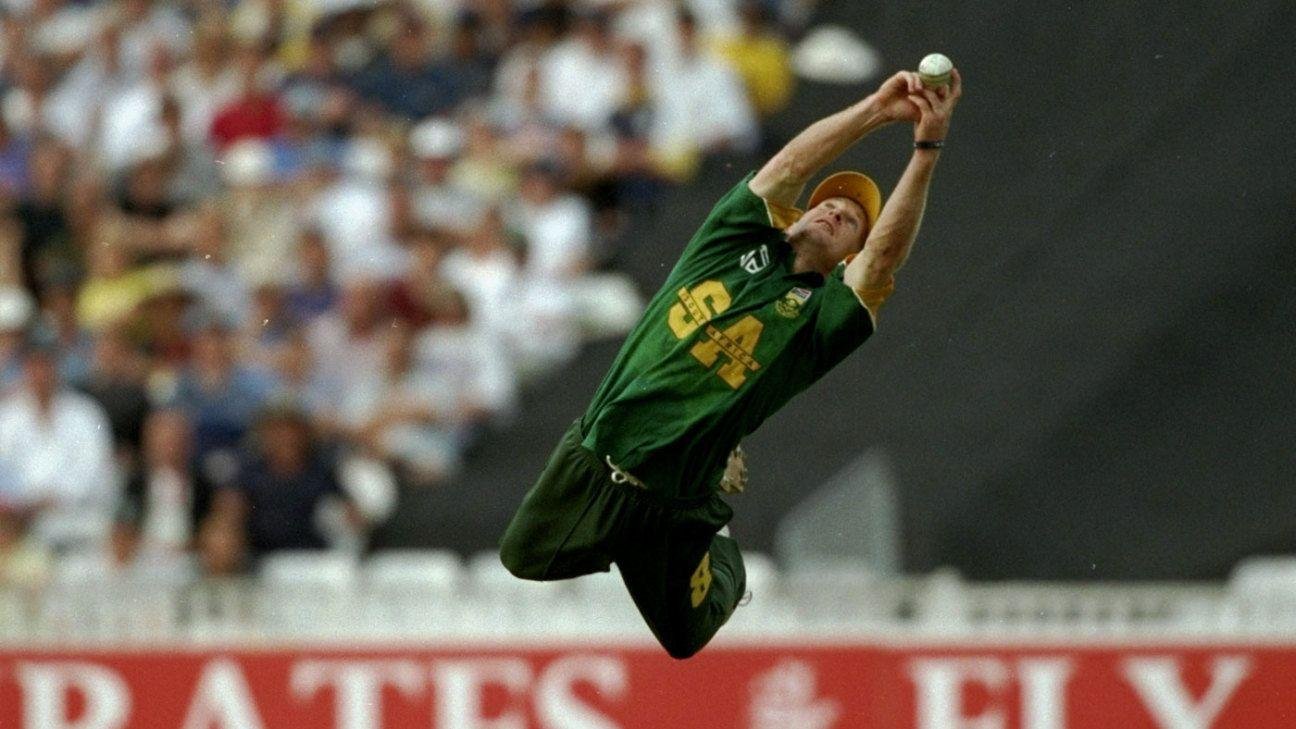
Test cricket gives fielders plenty of opportunities to change a match through moments of brilliance. A sharp reflex catch at short leg, a full-length dive in the slips or an instinctive one-handed grab can turn a promising batting partnership into a sudden collapse.
Across different eras, several fielders have produced catches that remain memorable among cricket fans. Some required exceptional anticipation, while others demanded remarkable hand-eye coordination and athletic ability.
Here are five outstanding catches in Test cricket, following the original ranking published by Sportskeeda in October 2017.
5. Andrew Strauss vs Australia, Nottingham, 2005
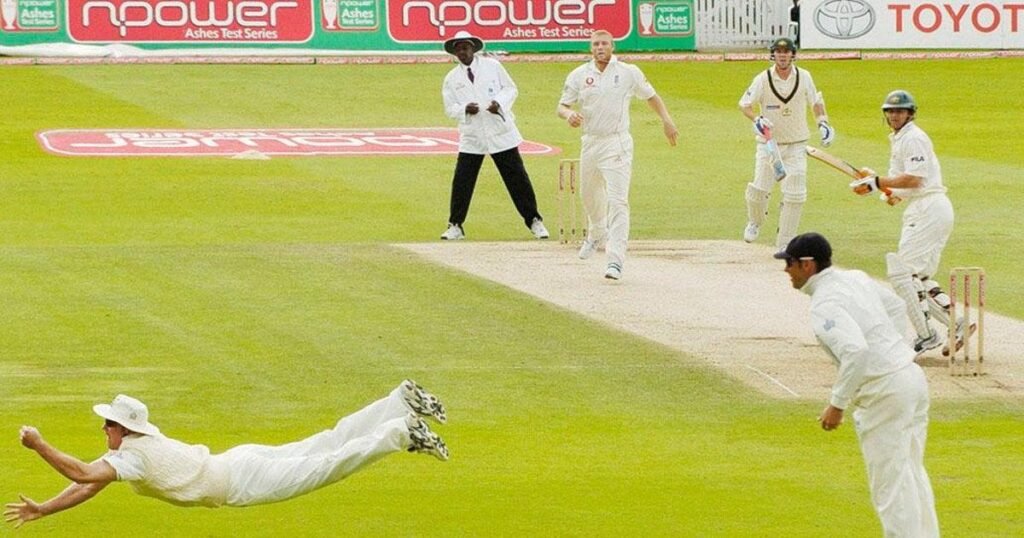
Andrew Strauss was not primarily known for spectacular fielding, but he produced a remarkable moment during the 2005 Ashes series.
In the fourth Test at Nottingham, Australia were rebuilding after losing early wickets. Adam Gilchrist, one of the most dangerous attacking batters in the Australian line-up, was at the crease and had the ability to shift the momentum quickly.
Andrew Flintoff bowled from around the wicket, and Gilchrist edged the delivery towards second slip. The ball travelled quickly and away from Strauss, who reacted by diving full length to his left.
Strauss completed the catch with his left hand while his body was airborne. The effort removed a dangerous batter at an important stage of the match and became one of the defining fielding moments of that Ashes series.
4. Jonty Rhodes vs India, Ahmedabad, 1996
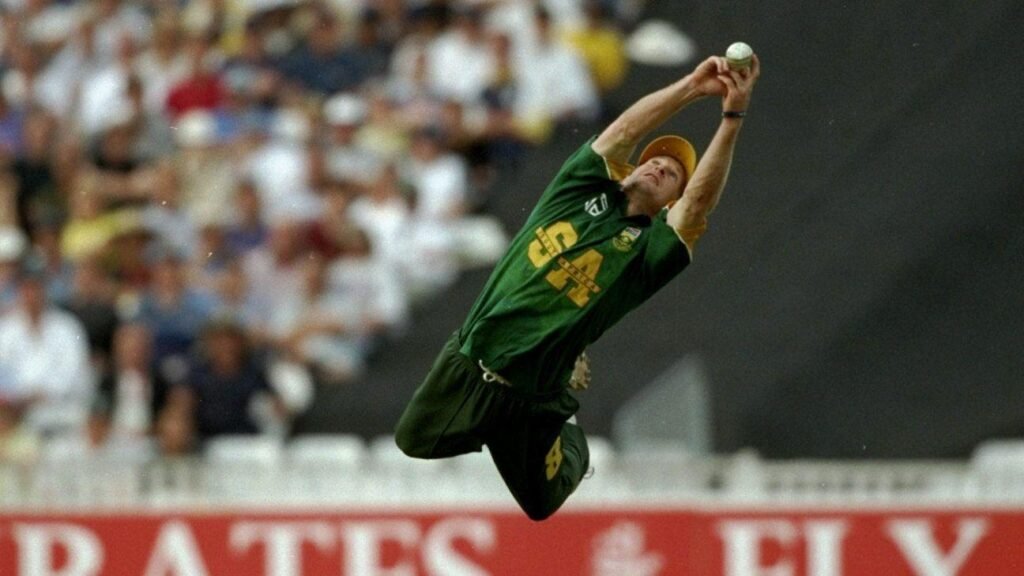
Jonty Rhodes built a reputation as one of cricket’s most athletic fielders, and his effort against India in Ahmedabad demonstrated why.
During the first Test of South Africa’s 1996 tour of India, Sachin Tendulkar faced off-spinner Pat Symcox. Tendulkar stepped out and struck a powerful on-drive towards short mid-wicket.
Rhodes was positioned in the area and reacted immediately. As the ball travelled past him, he threw himself forward and completed a two-handed catch close to the ground.
The catch required excellent anticipation and quick reflexes. Tendulkar’s shot had been struck firmly, leaving Rhodes very little time to react. His ability to move quickly and get both hands underneath the ball made the dismissal particularly impressive.
3. David Boon vs South Africa, Melbourne, 1993
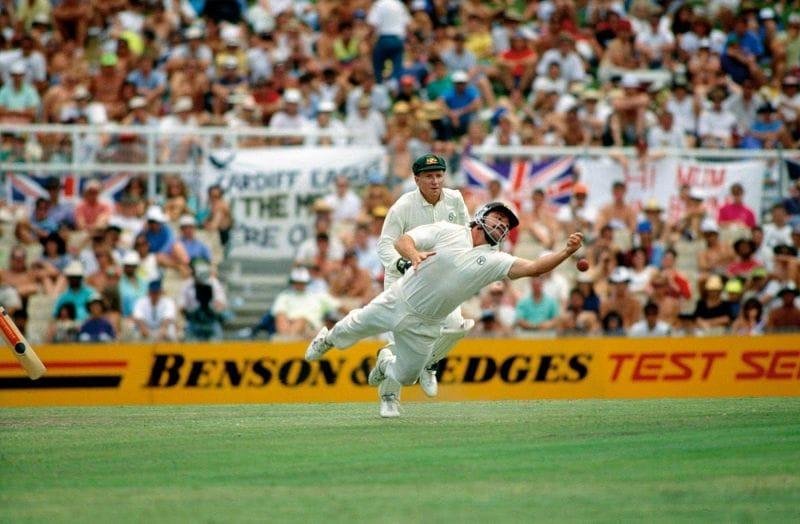
David Boon was known for his batting, but he was also an excellent close-in fielder. His catch to dismiss Hansie Cronje during the first Test between Australia and South Africa in Melbourne in 1993 remains a memorable example.
Cronje was batting confidently against Shane Warne. He attempted to use his feet against the leg-spinner, but the ball produced a leading edge rather than the intended shot.
Boon was stationed at silly point, close to the batter. The ball travelled in an unexpected direction, and he had to react instantly. He moved forward and managed to hold the catch despite the awkward trajectory and short reaction time.
Close-in fielding requires concentration because the ball can travel towards a fielder at considerable speed from only a few metres away. Boon’s anticipation and quick movement helped him complete a difficult chance and send Cronje back to the pavilion.
2. Viv Richards vs Australia, Brisbane, 1979
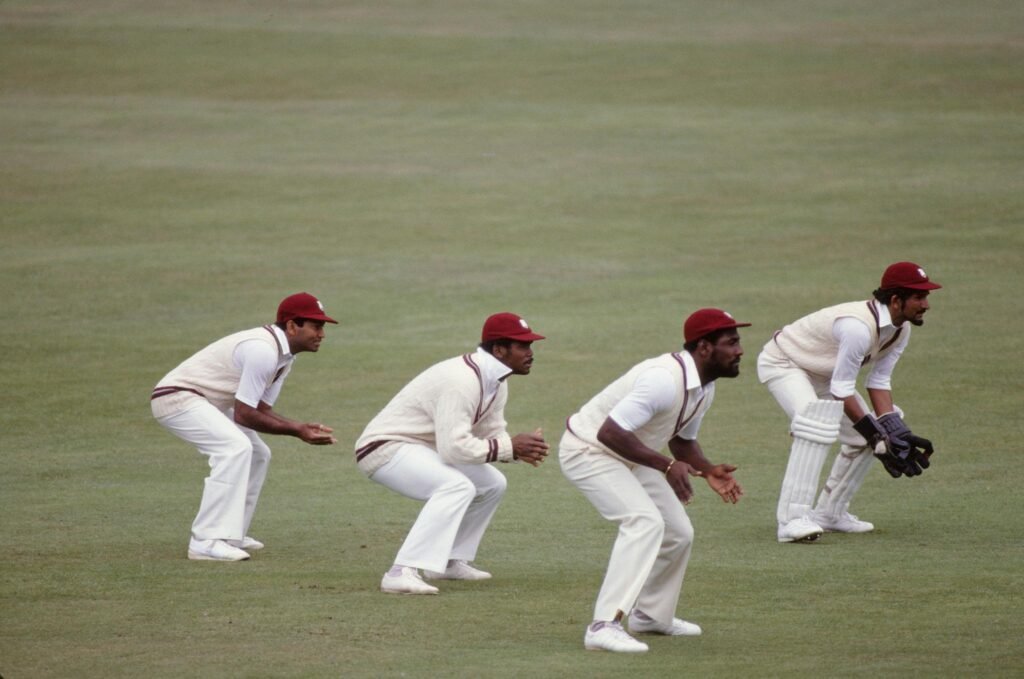
Viv Richards was one of the most dominant batters of his generation, but his fielding ability was another important part of his game.
During the first Test of West Indies’ tour of Australia in Brisbane in 1979, Richards produced a spectacular catch to dismiss Allan Border.
Joel Garner was bowling, and Border attempted a cover drive. The ball took a thick outside edge and travelled quickly towards the third-slip region, where Richards was positioned.
Richards reacted by jumping to his left and taking the ball one-handed. The speed of the edge made the chance difficult, but his reflexes and athleticism allowed him to complete the dismissal.
The catch illustrated that Richards was not merely a powerful batter. He could also make a decisive contribution in the field, particularly in the slip cordon.
1. Mark Waugh vs Pakistan, Hobart, 1999
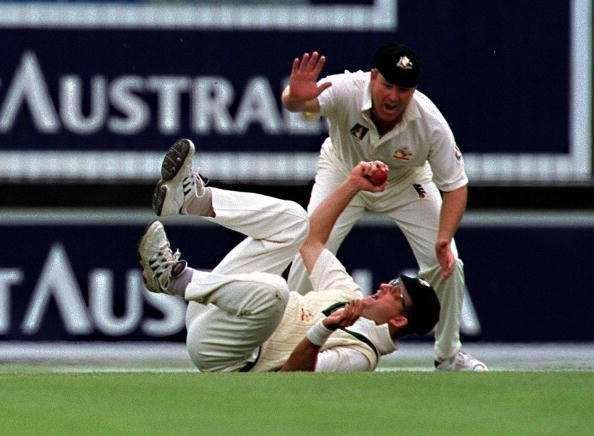
Mark Waugh’s catch to dismiss Inzamam-ul-Haq during the Test against Pakistan in Hobart in 1999 tops this list.
Inzamam was batting well and had reached 118 when he faced Shane Warne. He attempted a forceful cut shot, but the ball travelled finer than he intended towards the first-slip region.
Waugh was standing close to the batter, leaving him very little time to respond. He initially appeared to misjudge the speed of the ball, but recovered quickly and stretched out one hand to complete an extraordinary catch.
The difficulty came from the combination of the ball’s pace, the short distance and Waugh’s need to adjust his movement almost instantly. He managed to hold on even as the ball appeared to have travelled beyond his reach.
Waugh was already regarded as one of the finest fielders of his era, and this effort remains a standout example of his ability in the slips.
Fielding moments that define Test cricket
These five catches highlight the different skills required to excel in Test-match fielding. Strauss and Rhodes relied on full-length dives, Boon demonstrated the importance of close-in reflexes, Richards showed exceptional athleticism in the slips, and Waugh produced a remarkable one-handed recovery.
The ranking is subjective, but each effort demonstrates how a single moment in the field can become part of Test cricket’s lasting history.